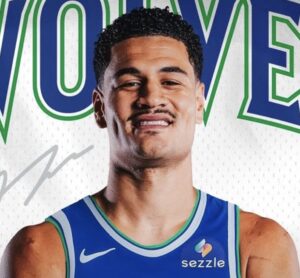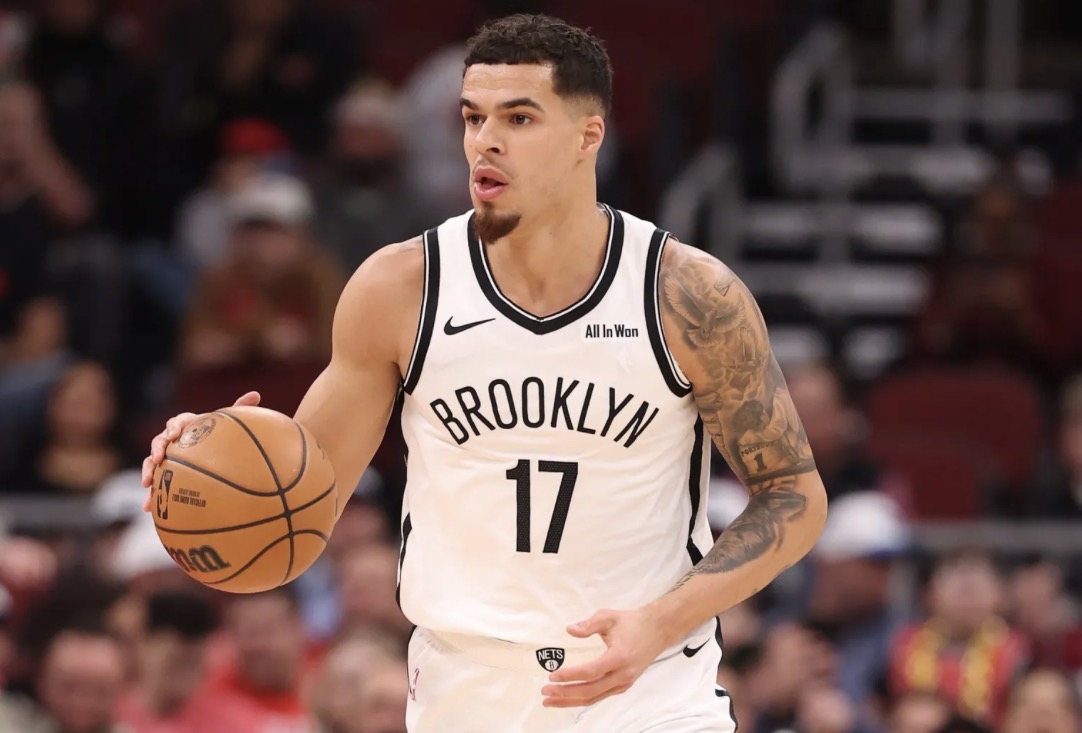
The Brooklyn Nets are entering another important stage of their rebuilding process, but the 2026-27 roster looks considerably different from the group that finished last season with a 20-62 record.
Brooklyn remains committed to developing one of the NBA’s youngest collections of talent, but management also added proven veterans who could make the Nets more competitive immediately.
The biggest changes include the arrival of veteran forward Julius Randle, rookie guard Mikel Brown Jr., defensive guard Keon Ellis, rookie forward Joshua Jefferson and veteran big man Moritz Wagner. They join Michael Porter Jr., who emerged as Brooklyn’s primary offensive weapon last season.
For head coach Jordi Fernandez, the challenge will be finding the right balance between developing the Nets’ young players and attempting to become competitive again in the Eastern Conference.
Brooklyn probably isn’t ready to contend for a championship, but this roster has enough talent to make the 2026-27 season much more interesting.
Looking Back at the 2025-26 Nets
Brooklyn finished the 2025-26 season at 20-62, missing the playoffs and finishing at the bottom of the Atlantic Division.
The record wasn’t particularly surprising considering the direction of the organization. Brooklyn placed a major emphasis on developing its young players while evaluating which pieces could eventually become part of a winning core.
Players such as Egor Dëmin, Nolan Traore, Ben Saraf, Drake Powell, Danny Wolf and Noah Clowney received valuable developmental opportunities.
The Nets struggled offensively, particularly with efficiency and consistent scoring outside Michael Porter Jr. Brooklyn needed additional shot creation, physicality and veteran leadership.
Those weaknesses helped shape the organization’s offseason.
Brooklyn Nets 2026-27 Current Roster
Brooklyn’s projected standard-contract roster entering training camp includes:
Guards
- Mikel Brown Jr.
- Egor Dëmin
- Nolan Traore
- Ben Saraf
- Keon Ellis
- Terance Mann
Forwards/Wings
- Michael Porter Jr.
- Julius Randle
- Josh Minott
- Drake Powell
- Joshua Jefferson
Forwards/Centers
- Day’Ron Sharpe
- Noah Clowney
- Danny Wolf
- Moritz Wagner
Brooklyn also has developmental players on two-way contracts, including Tyler Bilodeau, Chaney Johnson and Grant Nelson.
It is a roster built around size and versatility. Brooklyn can put several lineups on the floor featuring players capable of handling multiple positions, and Fernandez should have plenty of opportunities to experiment with combinations.
Mikel Brown Jr. Could Become the Face of the Rebuild
The most important new player in Brooklyn may eventually be Mikel Brown Jr.
Brooklyn selected Brown with the No. 6 overall pick in the 2026 NBA Draft after his season at Louisville.
The 6-foot-5 guard gives Brooklyn something every rebuilding organization needs — a young lead guard with the potential to become a centerpiece.
Brown should have an opportunity to play significant minutes immediately.
Brooklyn doesn’t necessarily need him to become a star during his rookie season. What the Nets need to see is development.
Can Brown run an NBA offense?
Can he consistently create advantages off the dribble?
Can he become an efficient perimeter shooter?
Can he develop chemistry with Dëmin?
Those questions could ultimately be more important to Brooklyn’s future than its final win-loss record.
Brown and Dëmin potentially give Brooklyn a fascinating young backcourt to develop over the next several seasons.
Julius Randle Gives Brooklyn a Proven Veteran Scorer
One of Brooklyn’s biggest offseason moves was acquiring Julius Randle from the Minnesota Timberwolves.
Randle is already very familiar with New York basketball after spending several seasons with the New York Knicks.
Now he crosses the East River and joins Brooklyn.
Randle immediately gives the Nets something they lacked last season: another established offensive creator.
He can score from the post, attack mismatches, rebound and create opportunities for teammates. More importantly, opposing defenses can no longer focus nearly all of their attention on Michael Porter Jr.
A Porter-Randle combination gives Brooklyn two proven veteran scorers.
The question is how long that combination will remain together.
Both players are older than Brooklyn’s primary developmental core, meaning the Nets could eventually face decisions about whether keeping them or converting veterans into additional future assets makes more sense.
For now, however, Randle makes Brooklyn considerably more dangerous offensively.
Michael Porter Jr. Remains Brooklyn’s Biggest Scoring Threat
Michael Porter Jr. enters the season as one of Brooklyn’s most important players.
Porter’s combination of size and shooting ability creates difficult matchups. At 6-foot-10, he can shoot over smaller defenders and stretch opposing defenses well beyond the three-point line.
Last season gave Porter the opportunity to handle a much larger offensive responsibility than he previously had in Denver.
Now he gets some help.
Randle should reduce some of the defensive attention Porter receives, while Brooklyn’s young guards will be responsible for creating easier opportunities for both veteran forwards.
Porter’s future will also be one of the major storylines surrounding the Nets. His contract situation and Brooklyn’s rebuilding timeline could make him an important name to watch approaching the trade deadline.
Keon Ellis Brings Defense to Brooklyn
The signing of Keon Ellis could become one of Brooklyn’s more underrated offseason moves.
Ellis doesn’t need a high volume of shots to impact games.
His value comes primarily from defense, effort and perimeter shooting.
Brooklyn needs players capable of defending opposing guards, especially considering how young much of the team’s backcourt remains.
Ellis can provide that.
He also gives Fernandez another option when Brooklyn needs defense alongside offensive-minded players such as Porter and Randle.
Joshua Jefferson Adds Another Young Forward
Brooklyn acquired Joshua Jefferson, the No. 28 selection in the 2026 NBA Draft, as part of the multi-team deal that brought Randle to Brooklyn.
Jefferson adds another versatile forward to an organization clearly emphasizing size.
At approximately 6-foot-9, Jefferson has the physical tools to defend multiple positions while contributing as a rebounder.
His offensive development will determine how quickly he becomes a regular part of Fernandez’s rotation.
Brooklyn can afford to be patient.
The Nets aren’t asking Jefferson to become a featured scorer immediately. If he can defend, rebound and play within the offense, he could eventually become another useful piece of the team’s young core.
Moritz Wagner Strengthens the Frontcourt
Brooklyn also signed veteran big man Moritz Wagner.
Wagner brings energy, physicality and NBA experience to a frontcourt that became younger following the departure of Nic Claxton.
He should primarily operate as a reserve, but his ability to provide offense and compete physically around the basket gives Fernandez another useful option.
Wagner also provides veteran experience behind Day’Ron Sharpe.
Day’Ron Sharpe Gets His Opportunity
With Claxton gone, Day’Ron Sharpe could receive the biggest opportunity of his NBA career.
Brooklyn re-signed Sharpe during the offseason, demonstrating that the organization still believes he can become an important part of its frontcourt.
Sharpe has always been a productive rebounder and physical interior player.
Now the question becomes whether that productivity can translate into a larger role.
A potential starting lineup featuring Brown, Dëmin, Porter, Randle and Sharpe would provide Brooklyn with tremendous size at multiple positions.
Sharpe doesn’t need many offensive touches with that group. Rebounding, screening, rim protection and interior defense will be his biggest responsibilities.
Egor Dëmin Faces an Important Second Season
While Brown will receive plenty of attention, Egor Dëmin may actually face greater pressure.
Brooklyn selected Dëmin eighth overall in 2025, making him one of the centerpiece players of its rebuild.
Now comes Year 2.
Dëmin’s size at guard remains intriguing. At roughly 6-foot-8, he can see over defenders and create passing angles unavailable to smaller guards.
Brooklyn needs more than flashes this season.
The Nets need Dëmin to become more efficient, more aggressive and more consistent.
If Dëmin and Brown both develop, Brooklyn could suddenly have one of the league’s most intriguing young backcourts.
The Rest of Brooklyn’s Young Core
One of the fascinating aspects of the Nets is simply how many young players remain under evaluation.
Nolan Traore remains an explosive young guard with significant developmental upside.
Ben Saraf gives Brooklyn another big guard capable of creating offense.
Drake Powell provides athleticism and defensive potential on the wing.
Danny Wolf offers unusual versatility for a player approaching seven feet.
Noah Clowney remains one of Brooklyn’s most intriguing frontcourt prospects because of his combination of size and perimeter potential.
Then there is Josh Minott, who gives Brooklyn additional athleticism and defensive versatility.
Not all of these players will become long-term starters.
That isn’t necessary.
Brooklyn needs two or three to separate themselves from the group and establish themselves as legitimate pieces alongside Brown and Dëmin.
Who Did the Brooklyn Nets Lose?
Brooklyn’s most significant offseason departure was Nic Claxton.
Claxton was traded to the Chicago Bulls as part of the four-team transaction that brought Randle and Jefferson to Brooklyn.
His departure changes the identity of Brooklyn’s frontcourt.
Claxton had been one of the team’s best defensive players and provided rim protection, mobility and switchability.
Brooklyn will now depend more heavily on Sharpe, Clowney, Wagner and Wolf.
The Nets also moved on from several other players.
Among the notable departures were:
- Nic Claxton — traded to Chicago
- Ziaire Williams — left in free agency for the Los Angeles Lakers
- Ochai Agbaji — departed in free agency
- Jalen Wilson — departed
- Malachi Smith — waived
- Isaiah Evans — draft rights traded to Minnesota
Brooklyn essentially exchanged some established pieces for a combination of young talent, veteran scoring and roster flexibility.
Brooklyn Nets Coaching Staff
Head Coach: Jordi Fernandez
Fernandez returns to lead Brooklyn through another important developmental season.
His responsibilities extend beyond wins and losses.
Brooklyn needs its young players to develop good habits, particularly defensively, while establishing an offensive system that takes advantage of the team’s unusual amount of positional size.
The Nets’ coaching staff includes:
- Steve Hetzel — Assistant Coach
- Jay Hernandez — Assistant Coach
- Travis Bader — Assistant Coach
- Ryan Forehan-Kelly — Assistant Coach
- Deividas Dulkys — Assistant Coach
- Dutch Gaitley — Assistant Coach
- Corey Vinson — Assistant Coach
- Connor Griffin — Assistant Coach
- Juwan Howard — Assistant Coach
- Geoffrey Staton — Trainer
Fernandez’s biggest challenge will be managing a roster that combines teenagers and early-20s prospects with established veterans such as Randle, Porter, Mann and Wagner.
Development remains the priority, but expectations should rise.
What Could Brooklyn’s Starting Lineup Look Like?
One potential opening-night lineup is:
PG — Mikel Brown Jr.
SG — Egor Dëmin
SF — Michael Porter Jr.
PF — Julius Randle
C — Day’Ron Sharpe
That lineup would be extremely interesting offensively.
Brown and Dëmin would handle much of the playmaking while Porter provides elite perimeter shooting and Randle gives Brooklyn a powerful half-court scorer.
Sharpe provides rebounding and interior strength.
Fernandez could also use Keon Ellis when he wants more perimeter defense or Terance Mann when he wants additional veteran experience.
Brooklyn’s depth gives the coaching staff plenty of options.
Biggest Strength: Size and Offensive Potential
Brooklyn has clearly prioritized positional size.
Brown is a 6-foot-5 guard.
Dëmin is approximately 6-foot-8.
Porter is 6-foot-10.
Randle is a powerful 6-foot-9 forward.
Sharpe is 6-foot-10.
The Nets could consistently have size advantages across several positions.
If their young guards can create shots and Porter continues providing high-level perimeter scoring, Brooklyn’s offense should improve considerably from last season.
Biggest Concern: Defense and Youth
The Nets’ biggest problem could be defense.
Losing Claxton removes their most established defensive anchor.
Sharpe is capable around the basket, but he will have greater responsibilities. Brooklyn’s young guards will also need to learn how to defend NBA actions consistently.
Turnovers could become another problem.
Young guards make mistakes.
Brown, Dëmin, Traore and Saraf will all experience difficult stretches.
Brooklyn must be willing to live with some of those mistakes if the organization wants its young players to develop.
The Michael Porter Jr. and Julius Randle Trade Question
Another storyline could develop as the trade deadline approaches.
Brooklyn is still building around young players.
Porter will be 28 this season and Randle turns 32 in November.
That doesn’t necessarily mean either player will be traded.
But if a championship contender offers Brooklyn significant draft compensation or a promising young player, management will have to listen.
The Nets have already accumulated substantial future draft capital.
Adding even more assets while continuing to develop Brown and Dëmin could remain part of Brooklyn’s long-term strategy.
If Brooklyn unexpectedly enters the Play-In race, however, management could decide to keep the veteran core together.
That makes the first half of the season particularly important.
Three Keys to the Nets’ 2026-27 Season
1. Develop Mikel Brown Jr.
Brooklyn needs to give Brown meaningful minutes and responsibilities.
There will be mistakes, but the organization needs to determine whether he can eventually become its franchise point guard.
2. Get a Breakout Season From Egor Dëmin
Dëmin doesn’t need to become an All-Star this season, but Brooklyn needs clear evidence of progress.
Improved shooting, decision-making and defensive consistency would represent a successful second year.
3. Improve Defensively Without Claxton
Someone must replace Claxton’s defensive impact.
Sharpe, Clowney and Wagner will all have opportunities, while Ellis should improve Brooklyn’s perimeter defense.
The Nets cannot become competitive if they remain near the bottom of the league defensively.
Brooklyn Nets 2026-27 Prediction
Brooklyn should be better than its 20-62 record from last season.
The addition of Julius Randle alone gives the Nets another established offensive creator, while Michael Porter Jr. remains capable of producing big scoring nights.
Brown gives Brooklyn another dynamic ball-handler, and Ellis improves the team’s defense.
But expecting Brooklyn to suddenly become a playoff team may be premature.
There are simply too many young players occupying important roles.
Development is rarely linear.
Brown will experience rookie struggles. Dëmin and Brooklyn’s 2025 draft class are still learning. Replacing Claxton defensively could take time.
The Eastern Conference also presents enough competition that Brooklyn could improve significantly without seeing a dramatic jump in the standings.
The Hoop Post Prediction: 32-50
A 32-50 record would represent a 12-win improvement and provide tangible evidence that Brooklyn’s rebuild is moving forward.
That would likely place the Nets somewhere around the lower portion of the Eastern Conference standings, with an outside opportunity to remain involved in the Play-In conversation deeper into the season.
A best-case scenario could push Brooklyn closer to 35-38 victories if Brown develops quickly, Dëmin makes a major second-year leap and Randle and Porter remain healthy and productive.
A worst-case scenario could put the Nets back into the mid-20s if the young backcourt struggles, the defense collapses without Claxton or Brooklyn trades veteran players during the season.
Final Outlook
The Brooklyn Nets are still rebuilding, but the 2026-27 season should feel different.
There is finally an interesting combination of young upside and established NBA talent.
Mikel Brown Jr. gives Brooklyn another potential cornerstone.
Egor Dëmin enters an important developmental season.
Michael Porter Jr. gives the Nets an established scorer.
Julius Randle brings physicality, playmaking and veteran production.
And players such as Day’Ron Sharpe, Noah Clowney, Nolan Traore, Ben Saraf, Drake Powell, Danny Wolf and Joshua Jefferson give Brooklyn numerous developmental possibilities.
The Nets don’t necessarily need to make the playoffs for this season to be successful.
They need progress.
If Brown looks like a potential franchise guard, Dëmin takes a significant step forward and several members of Brooklyn’s young core establish themselves as legitimate NBA rotation players, the Nets will finish 2026-27 in a much better position than where they started.
Brooklyn may still be a few years away from becoming a serious Eastern Conference contender.
But for the first time in this rebuild, the blueprint is becoming easier to see.
The Hoop Post 2026-27 Prediction: Brooklyn Nets — 32-50, outside the playoffs but significantly improved.