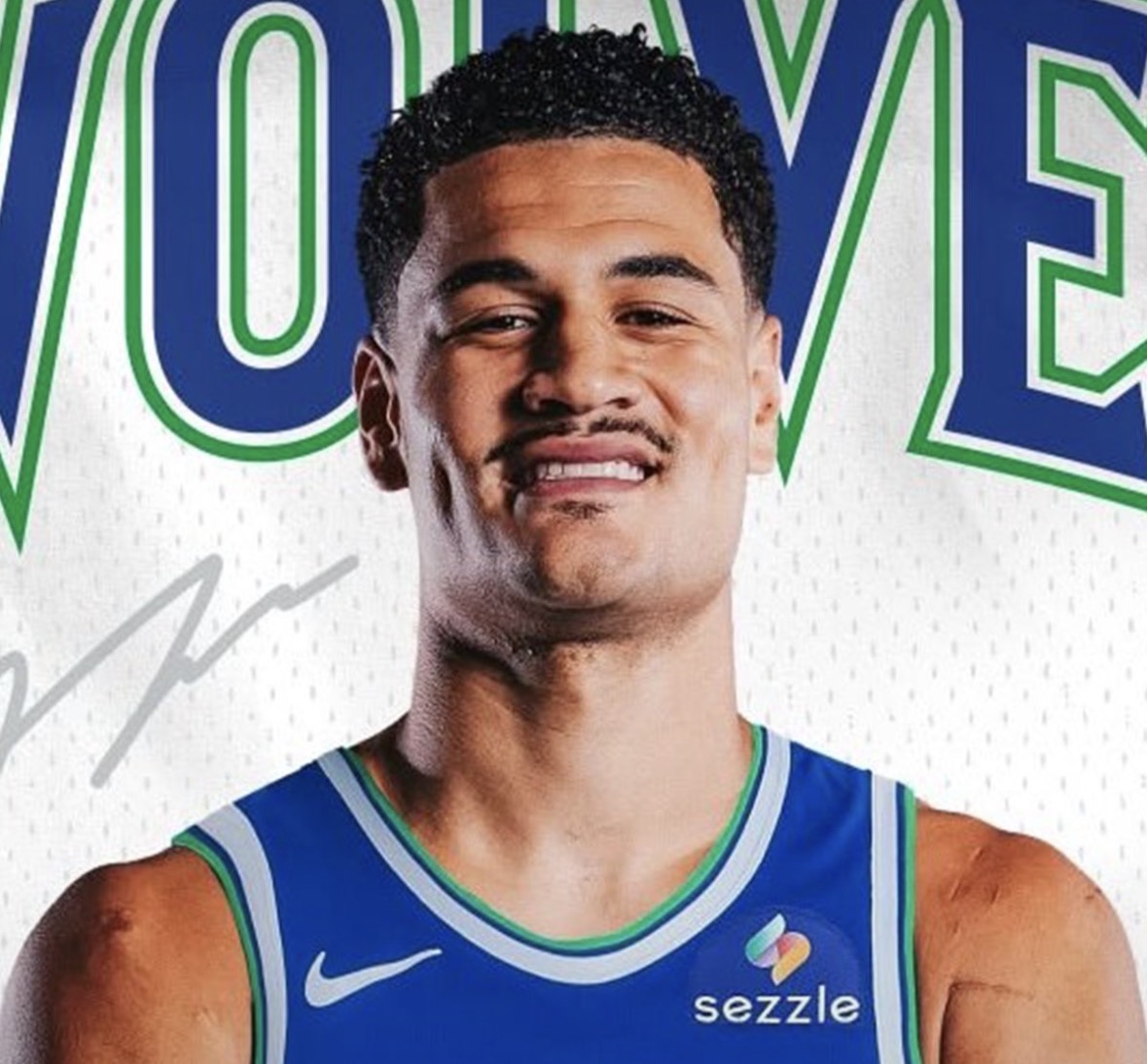
The Minnesota Timberwolves have made another significant move as they continue reshaping their roster for the 2026-27 NBA season.
Minnesota is sending guard Josh Green and cash considerations to the Utah Jazz in exchange for young forward Cody Williams and veteran wing John Konchar. The deal is about much more than simply swapping players. For the Timberwolves, it is largely about creating financial flexibility while taking a chance on a former lottery pick who could develop into a valuable piece.
Minnesota’s Bigger Picture
Green arrived in Minnesota this offseason as part of the trade that brought LaMelo Ball to the Timberwolves. However, his stay in Minnesota turned out to be extremely short.
Green’s contract carried a significant $14.7 million salary for the upcoming season, and moving that money gives Minnesota much-needed flexibility as the organization continues building around Anthony Edwards.
The biggest potential winner for Minnesota could be the entire roster.
The Timberwolves are expected to keep Cody Williams while waiving and stretching Konchar’s contract. That allows Minnesota to reduce its immediate financial burden and gives the team additional flexibility to complete its roster.
More importantly, clearing Green’s salary helps create a path for Minnesota to add Jonathan Kuminga.
That could ultimately make this trade far more important than the individual players involved.
Cody Williams Gets a Fresh Start
For Williams, this trade represents an opportunity to reset his career.
Williams was selected No. 10 overall in the 2024 NBA Draft by Utah. Coming into the league, he was viewed as a talented, long-term prospect with size, athleticism and offensive potential.
His first two seasons in Utah, however, have not gone exactly as planned.
Minnesota is betting that a change of scenery can unlock the player the Jazz believed they were drafting.
Playing alongside Anthony Edwards could give Williams a different environment and allow him to develop without being asked to immediately become a major offensive option.
That’s important.
Williams doesn’t need to come to Minnesota and score 20 points every night. The Timberwolves can afford to be patient with him.
If he develops into a reliable two-way wing who can defend multiple positions, knock down open shots and make plays when opportunities come his way, this trade could eventually look very good for Minnesota.
What Happens to John Konchar?
Konchar is an interesting part of the transaction because Minnesota reportedly isn’t expected to keep him long term.
The veteran wing has built a reputation as a dependable role player who can defend, rebound and contribute without needing the basketball.
Those are valuable qualities for an NBA team.
But Minnesota’s motivation appears to be more financial than rotational when it comes to Konchar.
The Timberwolves are expected to waive and stretch his contract, spreading the financial impact over multiple seasons.
So while Konchar may technically be part of the trade package, the bigger value to Minnesota is the flexibility created by moving Green’s contract.
Why Utah Made the Deal
From Utah’s perspective, this trade makes sense for a completely different reason.
The Jazz are in a different stage of their team-building process.
Utah has been developing young talent while trying to establish a new core around its younger players. Bringing in Green gives the Jazz an experienced wing who can provide defensive energy, athleticism and perimeter shooting.
Green isn’t being asked to become a franchise player in Utah.
Instead, he can provide useful minutes while the Jazz continue developing their young players.
His experience could also be valuable for a young roster that is still learning how to compete at the NBA level.
Green Could Have a Real Opportunity in Utah
Green now gets a chance to settle into a situation where his role could be clearer.
At 6-foot-5, Green brings athleticism and defensive versatility to the Jazz. He can guard multiple perimeter positions and doesn’t need a large number of shots to have an impact.
Utah could use him as a veteran presence while giving its younger players more time to develop.
For Green personally, this is an opportunity to turn an unexpected trade into a fresh start.
He went from Dallas to Charlotte, then Minnesota and now Utah in a relatively short period.
The Jazz could provide him with the stability necessary to establish himself as a dependable NBA rotation player.
The Impact on Anthony Edwards
This trade ultimately has to be judged by what it does for Anthony Edwards and the Timberwolves’ championship aspirations.
Minnesota needs to surround Edwards with players who can defend, shoot, create opportunities and take pressure off him.
Edwards is already the centerpiece of the franchise.
The goal should be to build a roster where he doesn’t have to carry the offense every night.
If moving Green allows Minnesota to add Kuminga while also retaining a young prospect like Williams, the Timberwolves could have significantly improved their roster flexibility.
That is the real story behind this trade.
Timberwolves Are Betting on Potential
Minnesota isn’t simply replacing one role player with another.
The organization is betting on Williams’ upside.
A former lottery pick who is still only 21 years old has plenty of time to develop. Minnesota has an opportunity to put him in a winning environment and surround him with established players.
That could be exactly what Williams needs.
Instead of being asked to help rebuild Utah, Williams can learn what it takes to contribute to a team with legitimate postseason expectations.
Who Won the Trade?
It’s difficult to declare an immediate winner because the Timberwolves and Jazz had different objectives.
Minnesota’s goal: create financial flexibility, add a young prospect and potentially open the door for another major addition.
Utah’s goal: acquire an experienced wing while moving on from Williams and Konchar.
From Minnesota’s perspective, the trade could become a major success if Williams develops and the financial flexibility helps the team add another important piece.
For Utah, Green gives the Jazz a proven NBA rotation player who can provide defense, athleticism and shooting while the organization continues developing its younger talent.
Final Take
This is the type of NBA trade that may not generate headlines because of the names involved, but its impact could be significant.
The Timberwolves are thinking beyond the immediate transaction.
They are trying to maximize their flexibility around Anthony Edwards, improve their roster construction and take a chance on a young former lottery pick.
Cody Williams gets perhaps the most important opportunity of his young career.
Josh Green gets a fresh start in Utah.
John Konchar becomes part of Minnesota’s financial maneuvering.
And the Timberwolves potentially create the flexibility necessary to bring in another major piece.
If Williams reaches the potential that made him a top-10 pick, and Minnesota uses the financial room created by Green’s departure to strengthen the roster around Edwards, this could end up being one of those quiet offseason moves that has a much bigger impact than it initially appears.
For Minnesota, this wasn’t just about trading Josh Green.
It was about positioning the Timberwolves for what comes next.