The NBA preseason may not count toward the regular-season standings, but that does not mean the games are without significance. For teams preparing for the 2026–27 campaign, every possession represents an opportunity to establish an identity, develop chemistry, evaluate young talent, and address weaknesses before the games begin to count.
The weekend of October 10–11, 2026, provided plenty of compelling storylines across the league.
The Boston Celtics delivered one of the weekend’s most impressive performances, overwhelming the Philadelphia 76ers with an explosive offensive display. The Phoenix Suns demonstrated encouraging signs against the San Antonio Spurs despite playing without Devin Booker. The Minnesota Timberwolves escaped Miami with a dramatic one-point victory, while the Golden State Warriors continued evaluating young players who could become important contributors.
Meanwhile, several teams left the weekend with difficult questions. Philadelphia struggled to contain Boston’s offensive attack, San Antonio continued searching for preseason consistency, and Milwaukee experienced an uncomfortable offensive performance against Charlotte.
The most important question is not simply which teams won or lost.
It is what those performances revealed about where each organization stands entering the new season.
For The Hoop Post, this weekend’s biggest story was the contrast between teams beginning to establish dependable habits and teams still experimenting with their rotations, defensive responsibilities, and offensive execution.
Here is our breakdown of the biggest winners, losers, emerging storylines, and lessons from an intriguing weekend of NBA preseason basketball.
NBA Weekend Winners: Which Teams Made the Strongest Impression?
Winner No. 1: Boston Celtics — Offensive Firepower Sends an Early Message
Boston Celtics 144, Philadelphia 76ers 106 — October 10
The Boston Celtics produced the most dominant performance of the weekend, defeating Philadelphia by 38 points in a game that highlighted their offensive versatility and overall depth.
Boston’s 144-point performance was remarkable even by preseason standards.
Payton Pritchard led the Celtics with 25 points, while Jayson Tatum added 23 points. The two provided a combination of perimeter scoring, offensive creativity, and efficient decision-making that Philadelphia struggled to control.
Boston also received an encouraging contribution from Paul George, who recorded 13 points, five rebounds, four assists, and five steals in his Celtics preseason debut.
George’s performance was significant beyond his scoring production.
His defensive instincts, ability to disrupt passing lanes, and versatility give Boston another experienced player capable of influencing the game without dominating the basketball.
The Celtics also controlled the rebounding battle, finishing with a 70–41 advantage. That difference illustrates how Boston consistently created additional opportunities while limiting Philadelphia’s ability to establish offensive rhythm.
From an analytical standpoint, Boston’s most impressive characteristic was its ability to generate offense from multiple positions.
Rather than depending entirely on isolation scoring, the Celtics moved the basketball, attacked defensive weaknesses, and maintained pressure throughout the contest.
That approach becomes particularly important during the regular season, when opponents can develop defensive strategies specifically designed to slow down individual stars.
The Hoop Post Analysis:
Boston’s performance suggests that its greatest advantage may be the number of different ways it can defeat opponents.
Tatum remains a central offensive weapon, but Pritchard’s scoring and George’s two-way contributions demonstrate the importance of having reliable alternatives.
The Celtics should not be declared championship favorites based on one preseason game. However, their ability to dominate the glass, force turnovers, and produce balanced offense offers an encouraging indication of their potential.
The challenge moving forward will be maintaining that intensity against healthier opponents and more established regular-season rotations.
Winner No. 2: Phoenix Suns — Young Talent and Improved Depth Offer Encouragement
Phoenix Suns 102, San Antonio Spurs 98 — October 10
The Phoenix Suns entered their matchup against San Antonio looking for progress rather than perfection.
What they received was an encouraging performance that provided several reasons for optimism.
Playing without Devin Booker, Phoenix defeated the Spurs 102–98 behind contributions from Luke Kennard, Jalen Green, Dillon Brooks, and promising young center Khaman Maluach.
Kennard led Phoenix with 20 points, connecting on four three-pointers and demonstrating his ability to stretch the floor.
Green added 18 points, while Brooks contributed 15.
However, one of the most intriguing developments involved Maluach, who recorded 10 points and 15 rebounds in 23 minutes.
For a young center continuing to adjust to the NBA, that performance represented an important step.
Maluach displayed activity around the basket, rebounding instincts, and the ability to influence possessions without requiring the offense to run through him.
His rebounding production was especially encouraging against a San Antonio frontcourt featuring Victor Wembanyama.
The Suns also showed an ability to build an early advantage and withstand a late Spurs rally.
Although the final margin was only four points, Phoenix demonstrated stretches of defensive activity and offensive balance that could become important as the regular season approaches.
The Hoop Post Analysis:
The Suns’ long-term success will depend on much more than the scoring production of Booker and Green.
Phoenix must develop reliable contributions from its supporting cast.
Kennard’s perimeter shooting could create valuable spacing, especially when defenses concentrate on the team’s primary scoring threats.
Brooks provides physicality and defensive experience, while Maluach represents an intriguing developmental option in the frontcourt.
Perhaps the biggest takeaway is that Phoenix showed it could remain competitive without its most established offensive star.
That does not guarantee regular-season success, but it represents the type of progress the Suns need.
For Phoenix to become a more consistent team, the organization must continue improving its defensive communication, rebounding, and ability to execute late in close games.
This was an encouraging victory, but the next step is turning individual flashes into a dependable team identity.
Winner No. 3: Minnesota Timberwolves — Resilience and Opportunity Produce a Dramatic Finish
Minnesota Timberwolves 125, Miami Heat 124 — October 10
One of the most entertaining games of the weekend took place in Miami, where Minnesota escaped with a 125–124 victory.
Antonio Reeves delivered the decisive basket, connecting on a floater with 2.3 seconds remaining to give the Timberwolves the lead.
The dramatic finish capped a competitive game that featured 16 lead changes.
Bones Hyland led Minnesota with 23 points, including five three-pointers, while Zyon Pullin contributed 22 points off the bench.
What made this performance especially interesting was the opportunity available to players outside Minnesota’s usual spotlight.
With Anthony Edwards not playing, the Timberwolves needed other contributors to assume greater offensive responsibility.
Hyland responded with confident perimeter shooting, while Pullin demonstrated his ability to provide scoring production in an expanded role.
The late-game execution also offered an encouraging sign.
Preseason contests often feature unfamiliar lineups, but players still must understand spacing, timing, and decision-making when possessions become critical.
The Hoop Post Analysis:
Minnesota’s victory illustrates the importance of developing dependable secondary scoring.
The Timberwolves already possess established talent, but postseason success often depends on contributions from players who receive less national attention.
Hyland’s shooting and Pullin’s offensive production provide the coaching staff with additional information when evaluating potential rotation combinations.
Reeves’ game-winning basket was another reminder that confidence in pressure situations can create opportunities for players fighting to establish themselves.
The larger lesson is that depth becomes especially valuable over an 82-game regular season.
Teams that can survive injuries, rest nights, and unexpected lineup changes often place themselves in stronger positions when the postseason arrives.
Winner No. 4: Golden State Warriors — Young Players Make Their Case
Golden State Warriors 111, Sacramento Kings 106 — October 10
The Golden State Warriors defeated Sacramento 111–106, but the most important development was the performance of their younger talent.
Yaxel Lendeborg delivered an impressive all-around game, finishing with 23 points, 10 rebounds, and six assists.
Those numbers demonstrate more than scoring ability.
Lendeborg contributed as a rebounder, passer, and offensive facilitator, displaying the versatility that modern NBA teams increasingly value.
For Golden State, developing productive young players remains essential to balancing immediate competitiveness with the franchise’s future.
The Warriors have spent years relying on experienced veterans and a recognizable offensive philosophy built around movement, spacing, and decision-making.
Integrating younger players into that environment requires patience.
A player must understand how to contribute without interrupting the team’s offensive flow.
Lendeborg’s performance suggested that he possesses intriguing tools to fit within a system that rewards basketball intelligence and versatility.
The Hoop Post Analysis:
The Warriors’ most encouraging takeaway was not simply their five-point victory.
It was the evidence that younger players can provide meaningful production while the organization evaluates its long-term roster.
Lendeborg’s combination of scoring, rebounding, and passing could become particularly useful if he continues developing defensively and improves his consistency.
The challenge will be translating preseason production into meaningful regular-season minutes.
That requires understanding defensive assignments, making quick decisions, and contributing even when scoring opportunities become limited.
Golden State should view this performance as another valuable step in its player-development process.
Winner No. 5: Toronto Raptors — Balanced Contributions Create Momentum
Toronto Raptors 114, Los Angeles Clippers 106 — October 10
The Toronto Raptors earned an eight-point victory over the Los Angeles Clippers in Vancouver, showcasing an encouraging combination of scoring balance and contributions from their core players.
RJ Barrett led Toronto with 20 points, five rebounds, and five assists.
Immanuel Quickley added 18 points, including five three-pointers, while Scottie Barnes contributed 12 points and 10 rebounds.
The Raptors received double-figure scoring from six players, highlighting an offense that did not rely exclusively on one individual.
For Toronto, this type of balance is particularly important.
The Raptors must establish offensive consistency while continuing to develop their identity around versatile players capable of contributing in several areas.
Barrett’s ability to attack the basket and create opportunities for teammates provides Toronto with an important offensive dimension.
Quickley’s outside shooting gives the team another perimeter weapon, while Barnes continues to demonstrate the versatility that makes him such an important part of the franchise’s future.
The Hoop Post Analysis:
Toronto’s most important lesson from the weekend was the value of offensive balance.
When multiple players become legitimate scoring threats, defenses have fewer opportunities to concentrate on one individual.
The Raptors still need to demonstrate that they can maintain efficiency against stronger defensive competition.
However, their victory over the Clippers offered a positive example of how their offensive pieces can complement one another.
NBA Weekend Losers: Teams Facing Important Questions
Loser No. 1: Philadelphia 76ers — Defensive Problems Demand Attention
Philadelphia’s 144–106 loss to Boston was the weekend’s most concerning result.
Although the 76ers were missing several important players, including Joel Embiid, Jaylen Brown, and LeBron James, the magnitude of the defeat revealed significant problems.
Boston dominated the rebounding battle, created opportunities from Philadelphia turnovers, and consistently attacked the defense.
VJ Edgecombe provided one of Philadelphia’s bright spots with 19 points, four assists, and four steals.
However, his individual production could not compensate for the team’s defensive difficulties.
The most troubling issue was Philadelphia’s inability to prevent Boston from controlling the game through second-chance opportunities and transition scoring.
The Hoop Post Analysis:
Philadelphia should not overreact to a preseason defeat, particularly with key players unavailable.
Nevertheless, defensive fundamentals cannot be ignored.
Rebounding requires positioning, communication, and consistent effort.
Transition defense requires players to recognize responsibilities immediately after turnovers or missed shots.
Those habits must become more reliable before the regular season begins.
The 76ers have the talent to become a dangerous team, but talent alone will not correct poor defensive execution.
Loser No. 2: San Antonio Spurs — Expectations Are Rising Faster Than Preseason Results
The San Antonio Spurs entered the weekend with considerable expectations surrounding their talented roster.
However, their 102–98 loss to Phoenix exposed areas that still require attention.
Victor Wembanyama contributed 13 points, seven rebounds, six assists, and two blocked shots.
Dylan Harper led San Antonio with 15 points, while Stephon Castle added 13 points.
Despite those individual performances, the Spurs struggled to overcome an early deficit.
San Antonio showed enough offensive creativity to remain competitive, but its defensive consistency and execution were not at the level expected from a team with championship ambitions.
The Hoop Post Analysis:
The Spurs possess one of the NBA’s most intriguing combinations of size, athleticism, and young talent.
Wembanyama’s ability to influence games as a scorer, passer, rebounder, and rim protector creates opportunities that few teams can replicate.
However, San Antonio must improve its ability to establish intensity from the opening possession.
Against quality opponents, slow starts can become costly.
The Spurs’ challenge is not proving that they have talent.
It is proving that their talent can consistently produce disciplined, connected basketball.
Loser No. 3: Milwaukee Bucks — Offensive Production Raises Questions
Charlotte Hornets 105, Milwaukee Bucks 90 — October 11
Milwaukee suffered a 15-point loss to Charlotte, scoring only 90 points in a preseason contest that highlighted concerns about offensive consistency.
A preseason loss does not determine how Milwaukee will perform once its regular rotation is established.
However, limited offensive production can reveal issues involving spacing, shot creation, and the ability to generate efficient opportunities.
For Milwaukee, the focus should be on identifying which lineup combinations create the best balance between scoring and defensive stability.
The Hoop Post Analysis:
The Bucks need to ensure that their offense does not become overly predictable.
Successful teams create opportunities through ball movement, screening, off-ball activity, and quick decisions.
When an offense becomes stagnant, opponents can pressure ball handlers and force difficult shots late in possessions.
Milwaukee’s coaching staff must use the remaining preseason opportunities to identify combinations that generate consistent offensive rhythm.
The result against Charlotte is not a reason for panic, but it is a reminder that execution matters more than reputation.
Loser No. 4: Sacramento Kings — Competitive Effort Must Produce Better Finishes
Sacramento’s 111–106 defeat against Golden State was another reminder of how narrow the margin can be between winning and losing in the NBA.
The Kings received an impressive performance from Darius Acuff Jr., who finished with 25 points and eight assists.
His offensive production was a positive development, but Sacramento was unable to turn that individual performance into a victory.
For the Kings, developing young talent is important, but so is establishing dependable late-game execution.
The Hoop Post Analysis:
Sacramento must continue improving its ability to convert competitive stretches into victories.
Close games often come down to defensive stops, rebounding, and shot selection.
Young players can provide energy and scoring, but teams also need structure when opponents increase defensive pressure.
Acuff’s performance was encouraging.
The larger challenge is creating a team environment in which individual production contributes to consistent winning basketball.
Other Important NBA Weekend Results
Several additional games produced storylines worth monitoring.
The Atlanta Hawks defeated the Indiana Pacers 119–117, with Jalen Johnson contributing 20 points and seven rebounds. Atlanta’s ability to withstand Indiana’s comeback attempts offered an encouraging example of composure.
Washington defeated Detroit 114–108 in overtime, providing another opportunity for young players and developing rotations to gain experience in competitive situations.
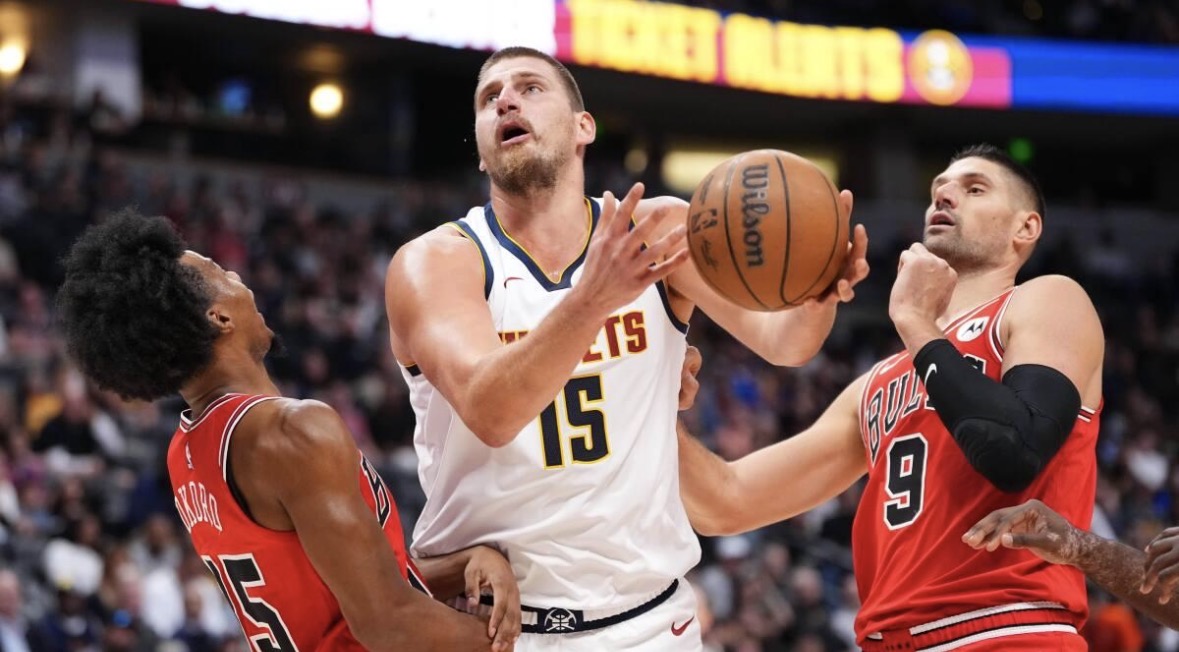
On Sunday, Cleveland defeated Orlando 119–105, while Denver outlasted Chicago 133–128 in a high-scoring matchup.
Dallas also responded strongly against Houston, earning a 132–115 victory after losing to the Rockets in their previous preseason meeting.
These games reinforce a central theme of the weekend: preseason basketball is not simply about determining which teams possess the most recognizable names.
It is about identifying which teams are building habits that can translate into regular-season success.
Five Important Lessons From the NBA Weekend
Lesson No. 1: Depth Could Separate Contenders From Pretenders
The modern NBA demands more than a talented starting lineup.
Injuries, demanding travel schedules, and the physical nature of an 82-game season require organizations to develop reliable contributors throughout the roster.
Boston demonstrated the advantages of multiple offensive options.
Phoenix received meaningful contributions without Booker.
Minnesota benefited from players who took advantage of expanded opportunities.
The teams that develop dependable depth during the preseason may be better equipped to handle adversity when the regular season begins.
Lesson No. 2: Defensive Discipline Remains Essential
Offensive highlights attract attention, but defensive execution frequently determines whether a team can compete at the highest level.
Philadelphia’s struggles against Boston illustrated the consequences of poor rebounding and ineffective transition defense.
San Antonio’s slow start against Phoenix also demonstrated the importance of defensive readiness.
Successful defenses depend on communication, positioning, effort, and the ability to respond quickly when opponents create advantages.
Those principles remain important regardless of how much offensive talent a team possesses.
Lesson No. 3: Young Players Are Creating Legitimate Rotation Competition
One of the most exciting aspects of preseason basketball is watching younger players compete for meaningful roles.
Khaman Maluach’s rebounding performance for Phoenix, Yaxel Lendeborg’s versatility for Golden State, and Darius Acuff Jr.‘s scoring for Sacramento were among the weekend’s notable developments.
Each player offered a different example of how young talent can influence a game.
However, earning a regular-season role requires more than one impressive performance.
Coaches evaluate consistency, defensive understanding, professionalism, and the ability to contribute within a defined system.
The players who combine talent with dependable execution will have the strongest opportunities to earn minutes.
Lesson No. 4: Three-Point Shooting Continues to Shape Offensive Strategy
Perimeter shooting remains one of the NBA’s most important offensive weapons.
Kennard’s four three-pointers helped Phoenix stretch San Antonio’s defense.
Quickley’s five three-pointers contributed to Toronto’s victory over the Clippers.
Hyland’s five made three-pointers gave Minnesota an important scoring boost.
The strategic value of perimeter shooting extends beyond the points themselves.
Reliable outside shooters force defenders to extend away from the basket, creating additional driving lanes and opportunities for teammates.
Teams that combine perimeter shooting with strong interior playmaking become particularly difficult to defend.
However, successful offenses must also avoid becoming entirely dependent on outside shots.
Balance remains essential.
Lesson No. 5: Preseason Results Require Perspective
Perhaps the most important lesson is understanding what preseason basketball can and cannot reveal.
A dominant victory does not automatically establish a championship contender.
A disappointing defeat does not mean a team is destined to struggle.
Coaches frequently experiment with lineups, manage veteran workloads, and provide additional minutes to younger players.
Those decisions influence the final score.
The most useful observations involve repeatable habits.
Does a team communicate defensively?
Can it rebound consistently?
Does the offense generate quality shots?
Are younger players demonstrating an understanding of their responsibilities?
Those questions provide more meaningful information than the final score alone.
NBA Teams to Watch Heading Into the 2026–27 Regular Season
Three organizations deserve particular attention following the weekend.
Boston Celtics: The Celtics showed impressive offensive depth and versatility. Their ability to maintain defensive intensity and rebounding dominance will be worth monitoring against stronger competition.
Phoenix Suns: The Suns demonstrated encouraging signs from their supporting cast. The development of Maluach and the offensive contributions of Kennard and Green could become important factors in Phoenix’s progress.
San Antonio Spurs: The Spurs possess tremendous talent, but they must establish greater consistency. Their ability to turn individual skill into dependable team execution will help determine their ceiling.
Beyond those teams, Golden State’s young-player development and Minnesota’s secondary scoring options also deserve attention.
As the preseason continues, the most revealing performances may come from players competing for the final spots in their teams’ regular rotations.
The Hoop Post Final Take: The NBA’s Biggest Lesson Is That Talent Must Become Teamwork
The weekend of October 10–11, 2026, offered a revealing preview of the challenges and opportunities awaiting NBA teams.
Boston delivered the strongest statement with its overwhelming victory against Philadelphia.
Phoenix showed that its supporting cast can contribute meaningful production even without Devin Booker.
Minnesota demonstrated resilience in a dramatic victory over Miami, while Golden State received encouraging contributions from its developing talent.
At the same time, Philadelphia, San Antonio, Milwaukee, and Sacramento were reminded that individual ability does not automatically produce successful team basketball.
Every organization enters a new season with expectations.
Some teams are pursuing championships. Others are attempting to return to the playoffs, establish a new identity, or develop young players into future stars.
Regardless of the objective, the principles of winning remain consistent.
Teams must defend, rebound, communicate, share the basketball, and execute under pressure.
The preseason provides an opportunity to build those habits before the stakes become greater.
The biggest mistake would be treating every preseason victory as proof of greatness or every defeat as evidence of failure.
What matters is whether teams are moving in the right direction.
For Boston, the direction appears encouraging.
For Phoenix, the weekend provided reasons to believe its depth and young talent could become important assets.
For San Antonio, the challenge is turning enormous potential into consistent execution.
And for Philadelphia, the priority must be establishing the defensive discipline required to compete against the Eastern Conference’s strongest teams.
The 2026–27 NBA season is approaching, and the competition for positioning, respect, and ultimately championship contention is beginning to take shape.
The Hoop Post’s biggest takeaway: October basketball does not determine who will win in June, but it can reveal which teams are developing the habits necessary to get there.
The teams that recognize those lessons now may be the ones making the most noise when the games truly matter.