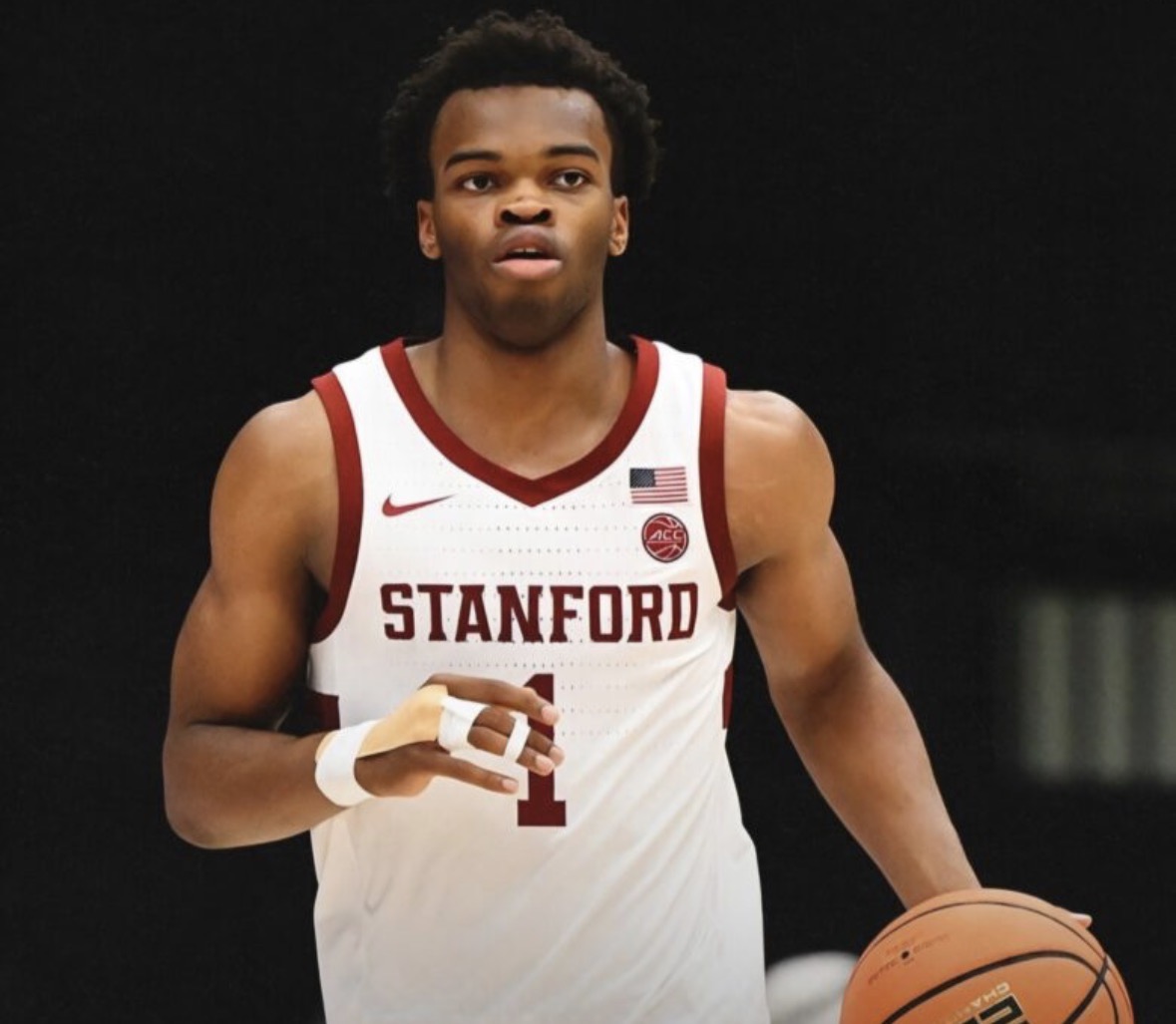
The 2026 NBA Draft class is loaded with intriguing prospects, but few players generate a bigger disconnect between statistical production and public perception than Stanford guard Ebuka Okorie.
At first glance, it is easy to understand why some evaluators remain hesitant. Okorie stands just 6-foot-1, a size threshold that often causes scouts to move on quickly in search of bigger, longer prospects. Yet when you dig into the numbers and study his film, a different story emerges. In fact, Okorie may be one of the most statistically interesting players in this entire draft class.
While many draft discussions focus on physical measurements and upside, Okorie’s production demands attention.
Elite Rim Pressure Despite Difficult Circumstances
One of the most impressive aspects of Okorie’s profile is his ability to consistently attack the basket. His rim attack rate ranks among the best for guards in this draft class, showcasing an aggressive downhill mentality that few prospects possess.
Critics may point to his 56.2 percent field goal percentage at the rim as evidence of inefficiency. However, context matters.
Throughout his Stanford career, Okorie frequently shared the floor with multiple non-shooters, often playing in lineups featuring two to four players who provided little spacing. As a result, defenses routinely packed the paint, forcing Okorie to navigate crowded driving lanes and finish through heavy traffic.
Despite those challenges, he remained an effective offensive weapon. His ability to draw fouls generated a 76th percentile free throw rate, while his rim attacks produced approximately 0.98 points per possession—making them one of Stanford’s most reliable sources of offense.
Speed That Changes Games
Okorie’s athletic testing reinforced what appears on film.
He posted one of the fastest three-quarter sprint times among prospects at this year’s NBA Draft Combine, validating the explosive first step that consistently allows him to beat defenders off the dribble.
His acceleration is elite. Whether attacking from a standstill or exploding out of one of his many hesitation moves and counters, Okorie routinely creates separation. Combined with outstanding body control, he can weave through multiple defenders, absorb contact, and maintain balance while finishing difficult plays around the basket.
Those traits are difficult to teach and become even more valuable at the NBA level, where creating advantages off the dribble is a premium skill.
A Better Shooter Than the Numbers Suggest
The surface-level shooting numbers may not jump off the page.
Okorie connected on 35.4 percent of his three-point attempts, a respectable but unspectacular mark. However, the nature of those attempts paints a much more encouraging picture.
Nearly 60 percent of his three-point attempts came off the dribble, one of the highest rates among draft prospects and second only to Bennett Stirtz in this class. These are significantly more difficult shots than catch-and-shoot opportunities.
Even so, Okorie converted 34 percent of those pull-up threes while facing consistent defensive pressure. Only 14 percent of his attempts were classified as unguarded, highlighting how rarely he benefited from clean looks.
When viewed through that lens, his shooting profile becomes far more impressive than the raw percentage suggests.
Defensive Activity Creates Additional Value
While offensive creation is his calling card, Okorie’s defensive metrics deserve recognition as well.
His steal rate reflects genuine anticipation and basketball IQ rather than reckless gambling. He consistently reads passing lanes, rotates effectively, and creates transition opportunities through smart defensive positioning.
Size limitations will always present challenges at the next level, but his instincts and competitiveness provide a foundation for becoming a functional team defender.
Why Scouts May Be Missing the Bigger Picture
History offers numerous examples of smaller guards who were discounted because evaluators prioritized physical measurements over production.
While no comparison is perfect, players such as Kemba Walker and Isaiah Thomas entered the league with similar concerns about size despite possessing elite offensive skills. Both went on to significantly outperform their draft positions.
No one is suggesting Okorie belongs in the lottery conversation. However, the tendency to dismiss highly productive small guards simply because they do not fit a preferred physical mold has repeatedly led teams to miss valuable talent.
The NBA continues to place increasing importance on shot creation, pace, and offensive versatility. Okorie checks each of those boxes.
Rising Stock and Upcoming Workouts
As draft night approaches, NBA teams appear to be taking notice.
Okorie currently has pre-draft workouts scheduled with the Chicago Bulls, Atlanta Hawks, and Dallas Mavericks. Those opportunities reflect growing league-wide interest in a player whose stock has steadily risen throughout the pre-draft process.
His combination of scoring instincts, ball-handling creativity, rim pressure, and playmaking ability projects well as an NBA second-unit floor general capable of generating offense immediately.
Final Thoughts
Ebuka Okorie may never be the biggest guard on the floor, but few prospects in the 2026 NBA Draft can match his blend of production, speed, shot creation, and offensive impact.
The statistical profile is strong. The film is compelling. The athletic testing supports what scouts see on the court.
For teams searching for value late in the first round or early in the second, Okorie represents exactly the type of prospect who has historically rewarded organizations willing to look beyond traditional measurements.
If a franchise can build a defensive scheme that protects his size limitations, it may find itself drafting one of the biggest steals of the 2026 NBA Draft.