Every NBA season begins with familiar conversations. Who will win the championship? Which superstar will capture the MVP award? Which franchise has assembled enough talent to make a deep playoff run?
Those questions dominate television debates, social media discussions, and preseason predictions.
But beneath the headlines, another story is developing across the league.
A generation of young players is approaching a defining moment in their careers. Some have already established themselves as important contributors. Others are searching for consistency, opportunity, and the confidence to become something greater.
And with the 2026–27 NBA regular season beginning October 20, the next chapter of their basketball journeys is about to unfold.
The most interesting story might not be about the biggest names in the league.
It might be about the players who are preparing to become them.
Houston’s Young Core Has Something to Prove
The Houston Rockets offer an interesting example of how quickly expectations can change for a developing basketball team.
With established veterans surrounding an emerging young core, Houston enters the season with ambitions that extend beyond simply being competitive.
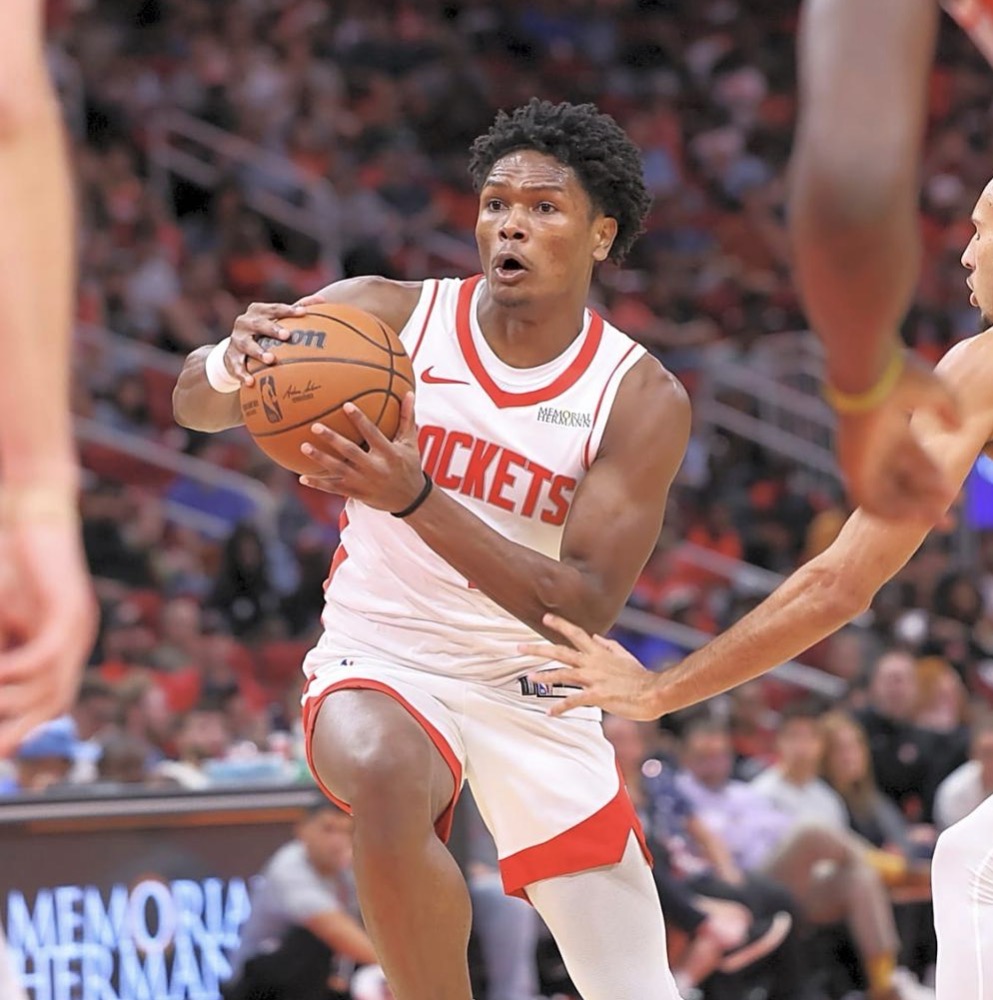
But while Kevin Durant brings star power and experience, the long-term direction of the franchise will also depend on the development of Amen Thompson, Reed Sheppard, and Tari Eason.
Each brings a different dimension to Houston’s identity.
Amen Thompson: The Versatile Difference-Maker
Thompson has the athletic ability and defensive versatility to influence a game without needing to dominate the ball. His ability to attack the basket, create transition opportunities, and defend multiple positions gives Houston flexibility.
The next challenge is turning those abilities into consistent production against the league’s best competition.
Reed Sheppard: Opportunity Meets Expectations
Sheppard represents another important piece of Houston’s future. His shooting touch and offensive instincts offer the Rockets a player capable of changing the rhythm of a game.
But becoming a reliable NBA guard requires more than making perimeter shots. Decision-making, defensive positioning, and understanding when to control the tempo will determine how much responsibility he earns.
Tari Eason: More Than an Energy Player
Eason’s value has often been associated with hustle, defense, and physical play.
Yet his offensive development could make him even more valuable. Houston’s October 15 preseason victory over Oklahoma City offered a glimpse of that progress, as Eason scored 12 points while showing confidence handling the basketball and creating opportunities.
If that growth carries into the regular season, Eason could become a more complete contributor.
Houston defeated Oklahoma City 116–89 in its preseason finale. The result itself will mean little once the regular season begins, but the performance offered an encouraging look at the Rockets’ depth.
The real question is whether these young players can deliver when opposing teams begin making adjustments and every possession carries greater consequences.
The Difference Between Potential and Production
One of the most fascinating aspects of the NBA is how quickly a young player’s reputation can change.
A promising rookie can become a dependable starter. A rotational player can emerge as a franchise cornerstone. A talented prospect who struggles early can eventually discover the role that allows his game to flourish.
But development rarely follows a straight line.
Young players must learn to adjust to scouting reports, defensive pressure, reduced playing time, and the physical demands of an 82-game season.
The challenge is not simply demonstrating talent.
It is demonstrating that talent consistently.
That distinction becomes especially important for players entering their second, third, or fourth professional seasons. At some point, the conversation begins shifting away from what a player might become toward what he can actually deliver.
And that is where the 2026–27 season becomes particularly interesting.
A New Rookie Class Is Ready to Challenge the League
While established young players are working to take another step forward, the newest NBA arrivals are beginning their own journeys.
A.J. Dybantsa, Darryn Peterson, and Cameron Boozer enter the league carrying expectations shaped by their accomplishments before reaching the professional level.
Their names were familiar to basketball followers long before their NBA debuts.
But professional basketball introduces an entirely different level of competition.
Defenders are stronger. Rotations happen faster. Offensive opportunities become more difficult to create. Even talented scorers must learn how to contribute when the offense is not built around them.
Dybantsa brings intriguing physical tools and scoring potential to Washington. Peterson offers Utah a young guard with the ability to create offense. Boozer arrives in Memphis with a polished offensive foundation and a strong understanding of the game.
Their progress should not be measured exclusively by scoring averages or highlight plays.
Watch how they respond after difficult shooting nights. Watch how they defend when matched against experienced professionals. Watch whether they make the extra pass, recognize defensive coverages, and continue competing when their teams fall behind.
Those details may reveal more about their futures than any single spectacular performance.
Why the NBA’s Middle Class Deserves More Attention
The league’s superstars naturally receive most of the recognition, but championship-level basketball depends on much more than elite individual talent.
Successful teams need players willing to defend, rebound, move without the ball, and accept responsibilities that may not produce impressive statistics.
These are often the players who change a playoff series.
A defensive stop in the final minute. An offensive rebound that creates another possession. A timely three-pointer from a player who has spent most of the evening waiting for his opportunity.
Those contributions rarely generate the same attention as a 40-point performance.
But they can be just as important.
For young players attempting to establish themselves, understanding how to contribute without being the featured scorer can determine whether they become long-term NBA professionals.
The league will always celebrate its superstars.
Yet the players who embrace the difficult, less glamorous parts of basketball often become indispensable to winning teams.
The 2026–27 Season Is About More Than Championships
When the regular season begins Tuesday, October 20, the attention will immediately turn toward marquee matchups and championship expectations.
The defending champion New York Knicks will begin their title defense. Oklahoma City and San Antonio will renew a compelling Western Conference rivalry, while several teams enter the season with dramatically different rosters.
But another competition will unfold throughout the league.
Young players will be fighting for starting positions, larger roles, contract opportunities, and the trust of their coaching staffs.
Some will exceed expectations.
Others will experience setbacks that test their confidence and patience.
And a few may develop into the next group of players who define the NBA for years to come.
That is what makes the beginning of a new season so compelling.
Nobody knows exactly which young player will make the biggest leap. Nobody can guarantee that an impressive preseason performance will translate into regular-season success.
What we do know is that opportunity eventually arrives for those prepared to seize it.
The Hoop Post Perspective: Watch the Players Who Are Still Building Their Names
Basketball has always been about more than the names printed across the back of a jersey.
It is about preparation, growth, sacrifice, and the ability to perform when an opportunity presents itself.
For every established NBA superstar, there was once a young player attempting to prove that he belonged.
The next generation is no different.
Amen Thompson is working to expand his impact. Reed Sheppard is developing the skills required to become a dependable guard. Tari Eason is demonstrating that his game can continue evolving. And talented newcomers such as Dybantsa, Peterson, and Boozer are preparing to discover what professional basketball demands.
Their stories may not always lead the national sports conversation.
But they deserve to be told.
Because while the NBA’s biggest stars are chasing championships, another generation is chasing something equally meaningful.
The opportunity to become the next face of the league.
And sometimes, the most compelling basketball stories begin long before the rest of the world starts paying attention.