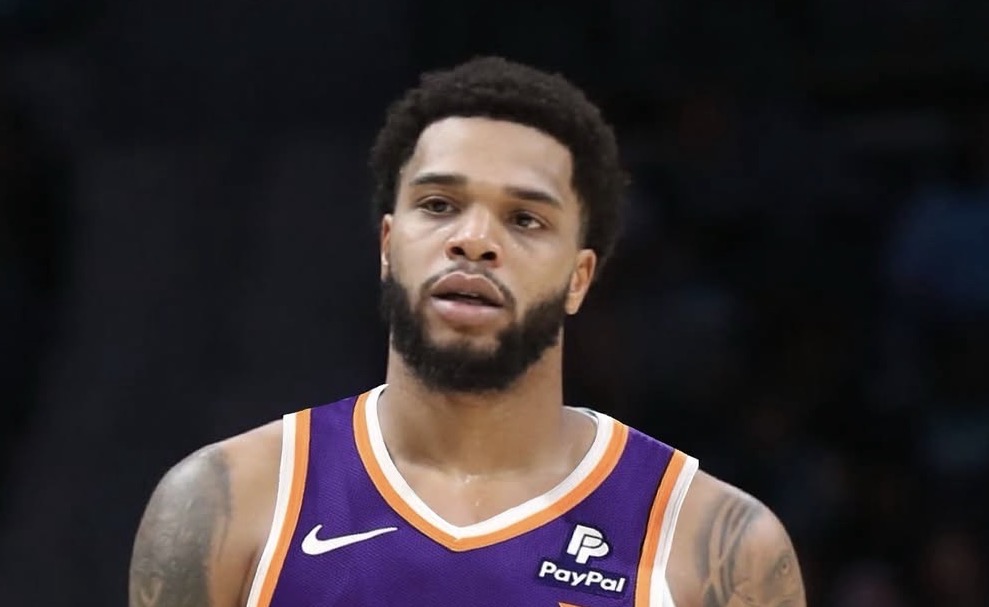
The Phoenix Suns just made another aggressive win-now swing, acquiring forward Miles Bridges from the Charlotte Hornets in a deal that continues their pattern of trading future draft capital for proven talent. In return, the Suns send out Grayson Allen, Royce O’Neale, and a highly valuable unprotected 2033 first-round pick, signaling once again that Mat Ishbia is fully committed to competing in the present.
Bridges now lands in Phoenix as a versatile, high-usage forward entering his prime years, coming off a strong statistical season and stepping into a roster that desperately needed his blend of scoring, athleticism, and downhill pressure.
Recent Production and Statistical Profile
In the 2025–26 season with Charlotte, Bridges played a full workload and delivered consistent production:
- 17.1 points per game
- 5.8 rebounds per game
- 3.2 assists per game
- 31.0 minutes per game
- 46% field goal shooting
- 82% free throw shooting
Beyond the box score, his impact metrics showed a player who was still capable of being a positive offensive force. Charlotte’s offense was significantly better when he was on the floor compared to prior seasons, with a positive net rating swing in 2025–26 after earlier defensive and efficiency struggles in past years.
In simple terms: Bridges is not a superstar, but he is a legitimate starting forward who can create offense without needing elite playmaking around him.
What Bridges Adds to the Suns
1. A Needed Athletic Forward Presence
Phoenix has often relied heavily on jump shooting and perimeter creation. Bridges immediately changes that dynamic.
He brings:
- Rim pressure from the wing
- Transition finishing
- Explosiveness in half-court drives
- Second-side attacking (cutting, crashing, quick decisions)
That athletic layer is something Phoenix has lacked in stretches, especially when possessions stagnate into isolation jumpers.
2. Secondary Scoring Behind the Stars
With the Suns built around high-usage creators, Bridges fits as a third or fourth scoring option who can punish defenses that overhelp on the primary stars.
His game is built on:
- Catch-and-drive opportunities
- Straight-line attacks off closeouts
- Spot-up threes at moderate volume
- Post-ups against smaller wings
He doesn’t need plays called for him every possession, but he can absolutely turn broken defenses into points.
3. Offensive Versatility Without Ball Dominance
One of Bridges’ biggest strengths is that he can score without dominating the ball.
That matters in Phoenix because:
- He won’t interrupt star creation flow
- He can play off elite guards and scorers
- He fits into both small-ball and traditional forward lineups
This is the kind of role player who can quietly swing playoff series because he punishes mismatches and fatigue.
4. Rebounding and Physicality
At nearly 6’6” with a strong frame and elite leaping ability, Bridges also helps Phoenix on the glass:
- Strong offensive rebounding for second chances
- Physical defensive rebounding support on small-ball units
- Ability to switch and still contest bigger wings
He’s not an elite defender, but he adds physical resistance in a roster that can sometimes lean finesse-heavy.
Concerns the Suns Are Betting On
This move is not without risk, and Phoenix is clearly making a calculated gamble.
Key concerns include:
- Inconsistent outside shooting over his career
- Defensive lapses against disciplined offenses
- Off-court history that has followed him throughout his career
- “Upside vs. discipline” volatility in his game
Even so, the Suns appear willing to absorb those risks in exchange for scoring punch and athletic upside.
Fit in Phoenix’s System
In Phoenix, Bridges projects best as:
- A starting power forward in small-ball lineups
- A transition finisher alongside elite guards
- A weak-side cutter in half-court sets
- A third scoring option behind primary stars
The Suns don’t need him to be perfect. They need him to be functional, physical, and aggressive—especially when defenses load up on their main creators.
Final Take
Miles Bridges is not a franchise-altering superstar, but he is exactly the type of player aggressive contenders chase: a physically gifted forward in his prime who can score in multiple ways, survive playoff rotations, and raise the team’s athletic ceiling.
For Phoenix, this is another all-in move—trading future flexibility for present-day firepower.
If Bridges stabilizes his shooting and plays within structure, he could be one of the most important “glue scorers” on a Western Conference contender. If not, the Suns are once again betting that talent and fit outweigh volatility.
Either way, Phoenix just got more athletic, more aggressive, and a lot more interesting.