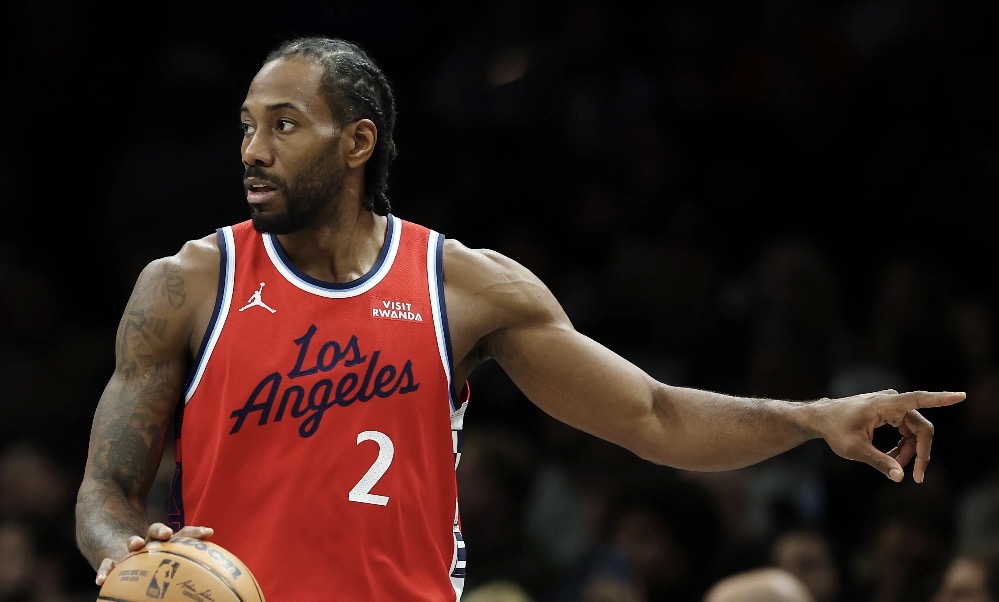
The NBA has handed the Los Angeles Clippers one of the most damaging penalties in league history following a yearlong investigation into salary-cap circumvention connected to Kawhi Leonard.
The Clippers will lose five first-round draft picks—one in each year from 2029 through 2033—and the organization must pay a record-setting $30 million fine. Owner Steve Ballmer has been suspended from all league and team activities for one year.
President of Business Operations Gillian Zucker has also been suspended without pay for one year. President of Basketball Operations Lawrence Frank received a six-month suspension without pay.
Leonard will not be suspended, and his contract will not be voided. However, he must pay the NBA $700,000 after the league determined that improper benefits were provided in connection with Leonard, his family and his former business representative and uncle, Dennis Robertson.
Robertson, who was reportedly fired by Leonard in June, has been banned for five years from conducting business or engaging with NBA teams and their affiliates on behalf of any player or other league personnel.
The Clippers will also be placed under a league-controlled compliance and monitoring program for five years.
What the NBA investigation found? The investigation determined that the Clippers were involved in arranging and helping Leonard secure outside income opportunities with four companies that had business relationships with the organization: Aspiration Partners, Boingo Wireless, Daktronics and Lockton Insurance.
According to the league’s findings, the Clippers did more than simply introduce Leonard to potential endorsement partners.
The organization allegedly helped facilitate agreements, encouraged companies to participate by offering team-related business and covered certain personal expenses connected to Leonard and his representatives. The team also failed to report requests made on Leonard’s behalf for additional off-court income.
NBA teams are allowed to introduce players to legitimate endorsement opportunities. Players can make money away from basketball through commercials, sponsorships, appearances and other business agreements. The problem begins when those opportunities are tied to a player’s team contract or are used to provide compensation that does not count against the salary cap.
The salary cap only works when every team follows the same financial rules. If an owner can use a business partner to provide a star with millions of dollars outside his NBA contract, the official salary becomes only part of the player’s actual compensation.
That would give wealthy ownership groups a major advantage over other franchises. Why the NBA came down so hard? This punishment is about much more than a fine.
Ballmer is one of the wealthiest owners in professional sports. A financial penalty—even one as large as $30 million—is unlikely to hurt the Clippers as much as losing five consecutive first-round selections.
Draft picks are the lifeblood of an NBA franchise. They can be used to select young players, complete major trades or rebuild an aging roster. Taking away five of them limits the Clippers’ ability to improve for years.
The league appears to be sending a direct message to every owner: financial power cannot be used to create a separate system of player compensation outside the Collective Bargaining Agreement.
The NBA also viewed this as an organizational failure rather than the action of one employee. That explains why the punishment reached Ballmer, Frank and Zucker and why the franchise will face five years of league monitoring.
The suspensions show that the NBA placed responsibility at the highest levels of the organization.
Ballmer’s one-year suspension removes the team’s owner from league and team activities. Zucker’s punishment affects the business side, while Frank’s suspension directly impacts the basketball operation. This creates instability at a time when the Clippers need strong leadership to manage the consequences.
Why Leonard avoided a suspension? One of the biggest questions surrounding the decision is why Leonard was not suspended and why his contract remains valid.
The NBA determined that rules were violated through the actions taken on Leonard’s behalf, including Robertson’s conduct. Leonard was still ordered to pay $700,000, but the league stopped short of taking away games, canceling his contract or affecting his player rights.
That is a significant victory for Leonard. The league could have created a much more complicated situation by voiding his contract. Such a decision would have affected Leonard, the Clippers, the players’ association and possibly other teams interested in acquiring him.
Instead, the NBA placed most of the responsibility and the strongest penalties on the Clippers’ organization and its leadership.
The decision does not completely clear Leonard. A $700,000 payment is still a serious penalty, and the findings will remain part of the story surrounding his time with the Clippers. But from a basketball standpoint, Leonard can continue his career without missing games because of this case.
Robertson received a much stronger individual punishment. His five-year ban removes him from NBA-related business and prevents him from representing players in dealings with teams and their affiliates.
The Clippers entered the Ballmer era with championship expectations. The arrival of Leonard in 2019 was supposed to change the direction of the franchise. Leonard had just helped lead the Toronto Raptors to an NBA championship and was viewed as one of the best two-way players in basketball.
The Clippers paired him with Paul George and believed they had assembled a championship team. Instead, the franchise’s run has been defined by injuries, postseason disappointments, roster changes and missed opportunities.
Now the Clippers must deal with a scandal that could affect their future well into the next decade. The lost picks from 2029 through 2033 could become extremely valuable. Leonard and the current veteran core may no longer be with the team by the time those drafts arrive. If the Clippers struggle during that period, they will not have their own first-round selections to help rebuild the roster.
That is what makes this penalty so damaging. It does not only punish the Clippers today. It places a cloud over the franchise’s long-term plans.
The NBA had to deliver a major punishment once it determined that the Clippers used team business relationships to help create outside income for Leonard.
The league could not treat this as a minor paperwork problem. Salary-cap circumvention challenges the competitive system that holds the NBA together.
Every team has owners with different levels of wealth. Ballmer has financial resources that few professional sports owners can match. If teams were allowed to arrange outside compensation for players through sponsors or business partners, the salary cap would lose its meaning.
The Clippers’ $30 million fine attracts attention, but the five lost first-round picks are the real punishment. Those selections would have helped the team make trades, develop young talent and prepare for life after Leonard.
The NBA also made an interesting decision by not suspending Leonard or voiding his contract. Some fans will believe the league was too easy on him, especially because the benefits were connected to his representatives.
However, the league appears to have concluded that the strongest evidence and responsibility were tied to the Clippers’ leadership and Robertson’s dealings on Leonard’s behalf.
The NBA’s decision protects the authority of the Collective Bargaining Agreement while avoiding a contract battle with the players’ association.
For the Clippers, this case damages more than their draft capital. It hurts the credibility of the organization.
Ballmer spent years trying to change the Clippers’ image. He invested heavily in the team, opened the Intuit Dome and attempted to establish the Clippers as a first-class organization capable of competing with the Lakers in Los Angeles.
This investigation creates a different kind of identity problem. The Clippers must now prove that their basketball and business operations can be trusted to follow league rules.
The punishment will also affect how other teams negotiate, complete trades and conduct business with sponsors. Organizations will likely become more careful about introducing players to companies that already have financial relationships with the team.
Every endorsement involving a player, an owner, a sponsor and a team business partner will receive more scrutiny after this case.
The Clippers wanted Leonard to become the face of a championship organization. Instead, his time in Los Angeles has now become connected to one of the biggest salary-cap scandals the NBA has seen.
Leonard remains eligible to play, and his contract stays in place, but the franchise around him has suffered a massive blow.
The Clippers must pay $30 million, operate without three of their most important leaders for extended periods and surrender five straight first-round draft picks. They will also spend the next five years under league monitoring.
This is not a punishment the Clippers can quickly put behind them. The effects could shape the franchise through 2033 and beyond. More importantly, the ruling delivers a warning to the rest of the NBA: no owner, executive, player or representative is bigger than the rules governing the league.