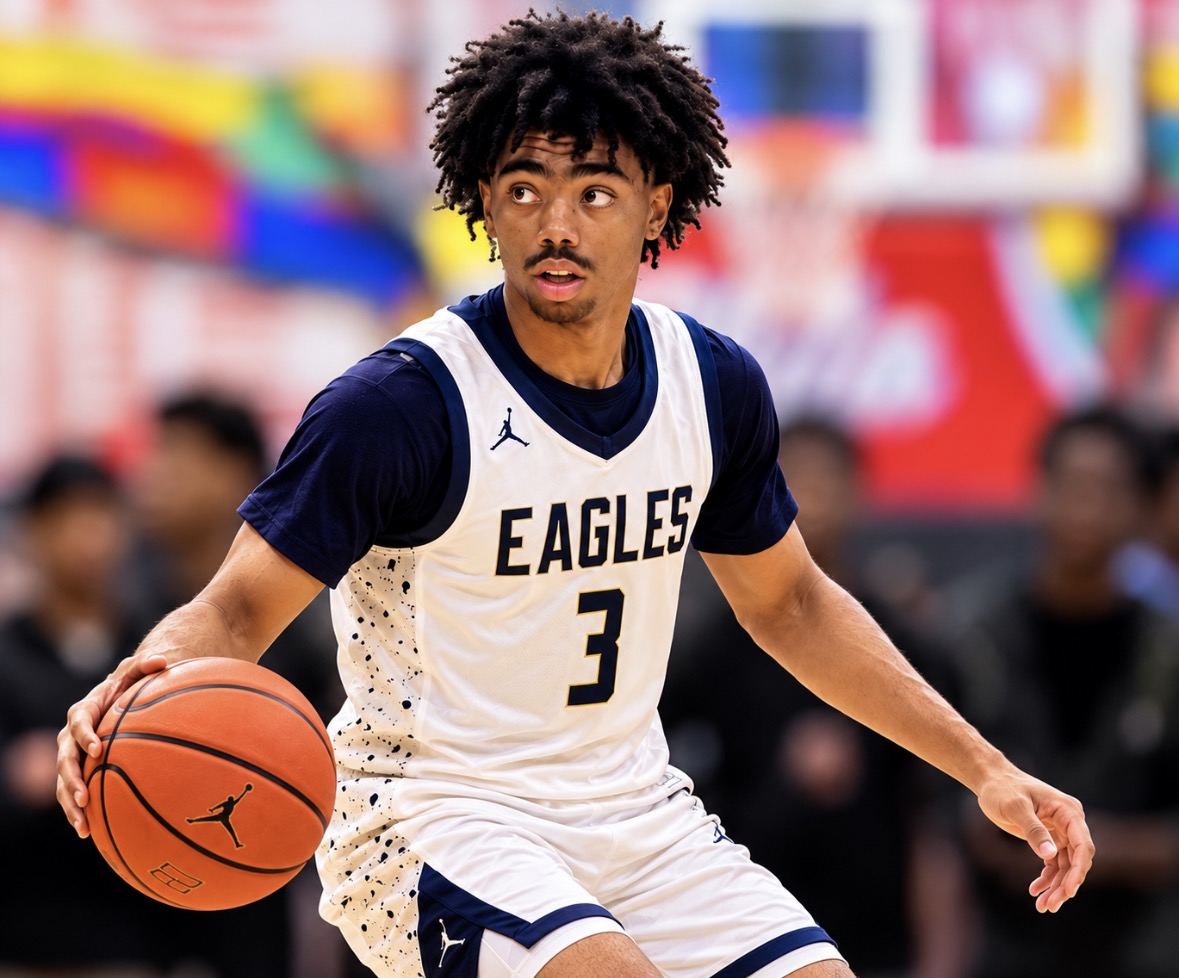
One of the more intriguing playmaking guards in high school basketball is preparing to make his college decision. Reese “Lil Skip” Alston, a 6-foot-3, 175-pound point guard from Second Baptist High School in Houston, Texas, will announce his commitment on Thursday, October 29, 2026.
Alston has narrowed his recruitment to five programs: Kentucky, Louisville, LSU, Tennessee, and Wichita State. Each presents a different opportunity for a talented floor general whose ability to create offense and control the tempo has become a defining part of his game.
The son of former NBA point guard and streetball legend Rafer Alston, Reese has developed his own identity on the basketball court. While his father’s reputation was built around exceptional ball-handling and creativity, the younger Alston has demonstrated an ability to combine those qualities with an aggressive offensive approach.
What makes Alston an interesting prospect is his ability to influence the game with the basketball in his hands. He is a playmaking lead guard who consistently creates scoring opportunities for himself and his teammates, particularly when operating as the primary decision-maker.
An Offensive Engine Who Controls the Action
Alston is at his best when the offense runs through him. He has a natural feel for creating advantages, whether attacking defenders off the dribble, pushing the basketball in transition, or finding teammates after drawing defensive attention.
His ability to initiate offense makes him difficult to contain when he establishes a rhythm. Rather than simply moving the basketball around the perimeter, Alston looks to put pressure on defenders and force rotations that create opportunities elsewhere on the floor.
At 6-foot-3, he possesses adequate positional size and length, along with deceptive strength and balance when absorbing contact. Those physical qualities allow him to maintain control while navigating traffic and attacking the basket.
His open-floor speed is another important part of his offensive arsenal. When given room to operate, Alston can accelerate into transition opportunities and put defenders in difficult positions. He also possesses underrated leaping ability, particularly when he has enough space to build momentum toward the rim.
Although much of his reputation centers on his offensive production, Alston has shown the ability to compete defensively. He is an underrated on-ball defender who can pressure opposing ball handlers for the length of the floor.
That defensive ability has not necessarily become his calling card, but it provides another dimension to his potential at the collegiate level.
The Next Step in His Development
Despite his offensive creativity, Alston’s biggest adjustment will involve learning how to influence games when he is not the primary scoring option.
Throughout much of his development, he has been most comfortable serving as the central figure in his team’s offensive attack. His ability to create shots and generate opportunities has allowed him to dictate possessions and operate with considerable freedom.
However, playing alongside other talented players requires a different approach.
There have been situations where Alston has struggled to adjust when asked to organize the offense rather than generate scoring opportunities himself. At times, that has resulted in difficult shot attempts or possessions where he has been reluctant to move the basketball and operate away from the action.
Those moments highlight an important area of development.
At the college level, Alston will need to recognize when to attack and when to allow the offense to develop through his teammates. Becoming more comfortable playing without the basketball, making quicker decisions, and controlling the pace without forcing opportunities will be essential.
The challenge is not necessarily reducing his aggressiveness. Instead, it is learning how to use that aggressiveness more selectively while keeping his teammates involved.
If Alston makes those adjustments, his offensive creativity could become even more effective against stronger competition.
Examining His Five College Finalists
Kentucky offers Alston the opportunity to compete in a high-profile basketball environment where expectations are significant. His ability to create offense could provide value, but he would need to demonstrate that he can balance individual production with the responsibilities of directing a talented roster.
Louisville presents an intriguing possibility for a guard who enjoys attacking defenses and creating opportunities off the dribble. Alston’s playmaking instincts could translate well, provided he continues improving his decision-making and ability to operate within a structured offense.
LSU could offer an opportunity to develop his offensive versatility while competing against SEC opponents. His ability to create scoring opportunities would be valuable, although improving his shot selection and consistency as a facilitator would remain important.
Tennessee would present a particularly interesting challenge because of the defensive accountability and physical demands associated with its basketball identity. Alston’s ability to pressure opposing guards could help him adjust, but his offensive discipline would also be tested.
Wichita State could provide another developmental path where Alston’s ability to handle the basketball and initiate offense becomes an important part of his growth. His success would depend on how effectively he balances creating his own opportunities with organizing the team’s attack.
A Decision That Could Shape His Development
For Alston, choosing a college will involve more than finding a program willing to give him offensive freedom.
The most important consideration should be identifying an environment that allows him to develop into a complete point guard.
His creativity, ability to break down defenders, and confidence with the basketball give him a strong offensive foundation. However, his long-term development will depend on becoming more consistent in his decision-making and learning to elevate the players around him.
As Thursday’s announcement approaches, the question is not whether Alston can create offense.
The bigger question is how effectively he can transition from being the player who generates most of the offense to becoming the point guard who makes an entire team better.