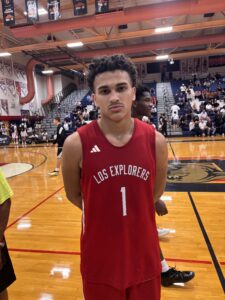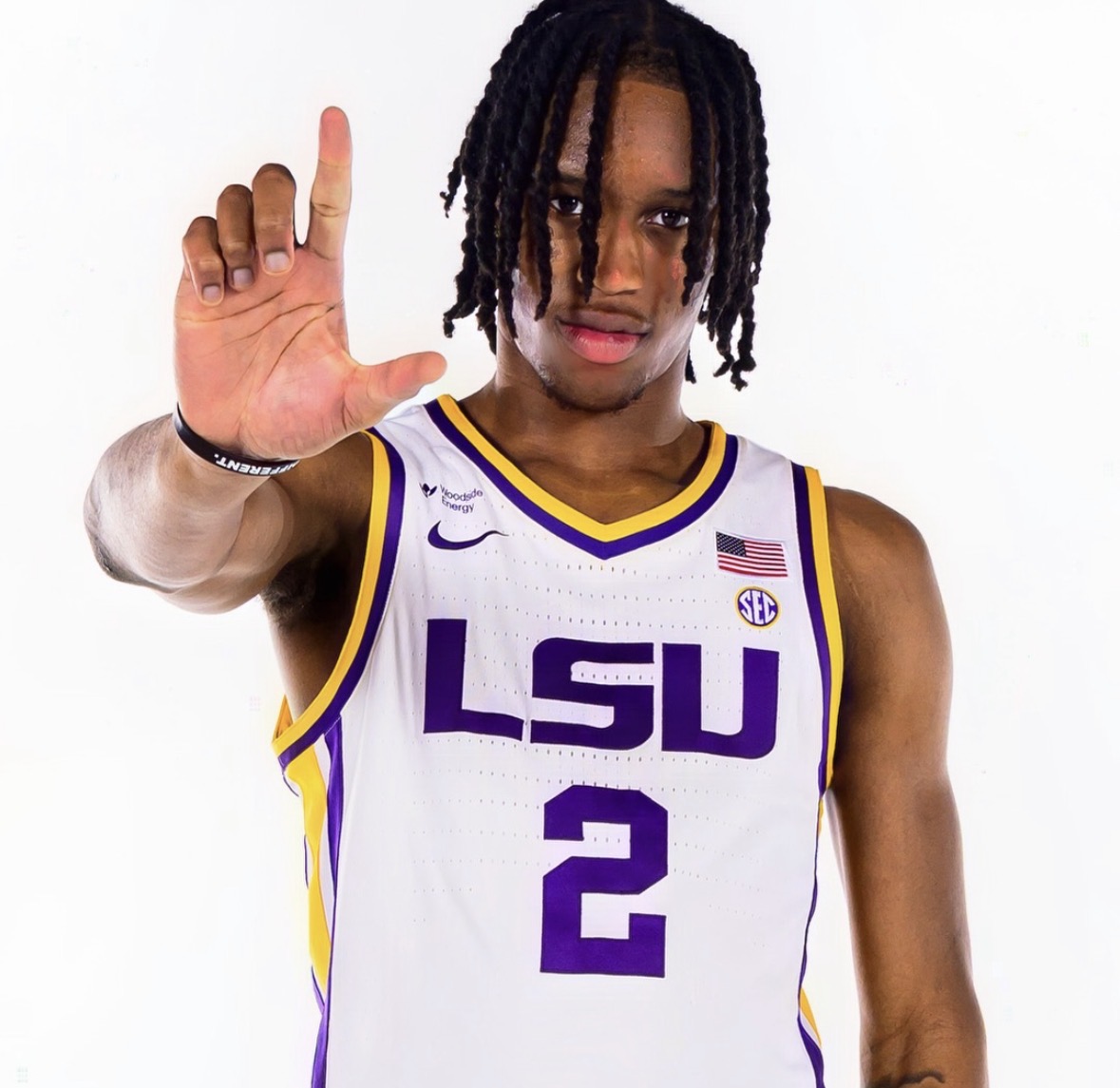
LSU landed a major piece for its future backcourt Sunday night when talented combo guard King Gibson announced his commitment to the Tigers on ESPN2.
The 6-foot-5, 180-pound guard selected LSU from a final group that also included Providence, Arkansas and Louisville.
For LSU, Gibson’s decision represents an important recruiting victory. The Tigers are adding a long, athletic guard with the versatility to impact the game as a scorer, playmaker and defender.
Gibson’s combination of size and guard skills makes him particularly intriguing at the college level. Instead of fitting into one traditional position, he has the ability to handle multiple responsibilities in the backcourt.
That could make him an important piece of LSU’s future.
What Gibson Brings to Baton Rouge
At 6-foot-5, Gibson brings excellent size to the guard position.
He can use his length to attack smaller defenders while also possessing the ball-handling ability to create opportunities off the dribble. Gibson is comfortable getting downhill and putting pressure on the defense, but his game isn’t limited to attacking the basket.
His ability to score from the perimeter makes defenders respect him away from the rim, opening driving lanes for himself and opportunities for his teammates.
That versatility is valuable because LSU won’t necessarily have to decide whether Gibson is a point guard or shooting guard.
He can be both.
Gibson can initiate offense, play alongside another ball-handler or move off the basketball and become a scoring threat from the wing.
Gibson Can Give LSU Another Playmaker
One of the biggest potential benefits of adding Gibson is having another player capable of creating offense when a possession breaks down.
College basketball increasingly depends on guards who can make plays without needing an offense specifically designed to get them a shot.
Gibson has that potential.
He can attack a defender one-on-one, use his size to get into the lane and create scoring opportunities for others when the defense collapses.
Having a bigger guard who can rebound and immediately push the basketball could also help LSU increase its tempo. Instead of waiting for an outlet pass, Gibson can potentially grab the rebound and start the transition attack himself.
Those are the types of plays that can put tremendous pressure on opposing defenses.
Size in the Backcourt Matters in the SEC
Gibson’s physical profile could become especially valuable once he reaches SEC competition.
The conference features athleticism, length and physical defensive pressure throughout the league. Bigger guards can have an advantage because they are better equipped to see over defenders, absorb contact and defend multiple positions.
At 6-foot-5, Gibson gives LSU flexibility.
The Tigers could pair him with a smaller point guard without sacrificing size. They could also use Gibson as the primary ball-handler in bigger lineups.
Defensively, his length gives LSU the possibility of switching assignments and matching him against different types of perimeter players.
That versatility could become one of his biggest strengths.
A Significant Recruiting Victory for LSU
Gibson choosing LSU over Providence, Arkansas and Louisville is also significant because of the competition the Tigers faced during his recruitment.
Those programs provided Gibson with several different options and basketball environments.
He ultimately chose Baton Rouge.
For LSU, winning recruiting battles for players of Gibson’s caliber is important when trying to build a program capable of consistently competing in the SEC and nationally.
One commitment doesn’t build an entire roster, but landing a talented guard can make it easier to construct the pieces around him.
LSU now has a player it can point to when recruiting shooters, wings and frontcourt prospects.
Building Around King Gibson
Gibson’s versatility gives LSU several options when putting together the rest of its recruiting class.
Adding another point guard wouldn’t necessarily create a positional conflict because Gibson can play off the ball.
Adding another scoring guard could allow LSU to build a larger, more athletic backcourt.
Adding shooters around Gibson could create driving lanes and give him targets when defenses collapse.
And surrounding him with athletic frontcourt players could create opportunities in transition and in pick-and-roll situations.
That’s what makes Gibson such an important addition. LSU isn’t recruiting around a player who can only fill one role.
The Tigers are getting a guard who potentially allows them to play several different styles.
What King Gibson’s Commitment Means for LSU
The biggest takeaway from Gibson’s commitment is that LSU has added a potentially significant building block to its future backcourt.
His size immediately stands out, but his ability to combine that size with guard skills is what could eventually separate him.
A 6-foot-5 guard capable of creating his own shot, handling the basketball, finding teammates and defending multiple perimeter positions gives a coaching staff plenty of options.
There will still be development ahead before Gibson arrives on the college stage. Like every young prospect, he will continue improving his strength, decision-making, shooting consistency and ability to defend at a higher level.
But the tools are there.
For LSU, the next step is continuing to build around him.
The Tigers have secured a talented backcourt prospect who had several major programs pursuing him and ultimately decided Baton Rouge was the place for his college career.
King Gibson is headed to LSU, and his commitment gives the Tigers an athletic, versatile guard who could become an important part of the program’s future.